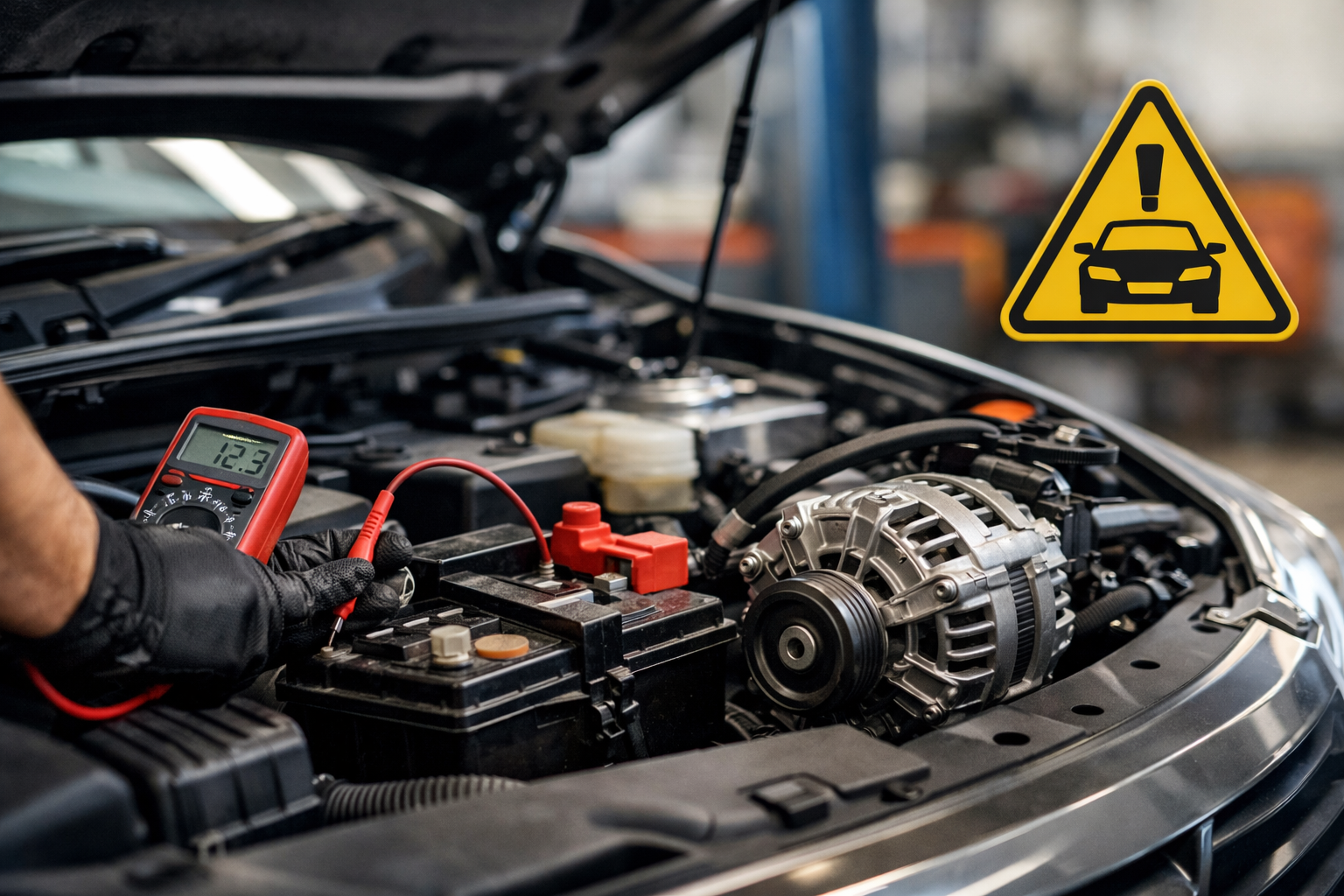
Failing an MOT can be stressful, inconvenient, and costly — especially if it could have been avoided. Every year, thousands of vehicles fail their MOT test for simple, preventable reasons.
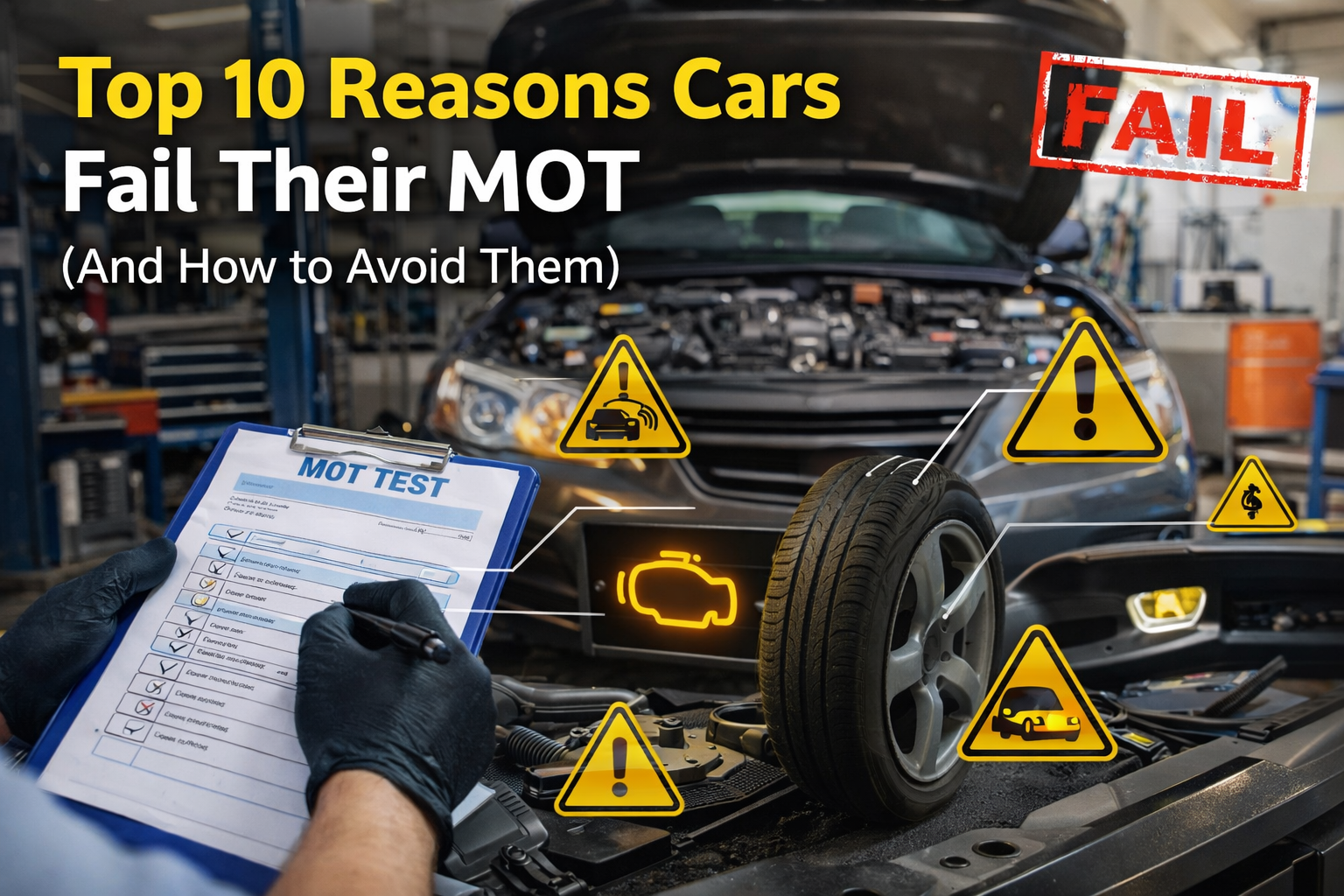
In this guide, we break down the top 10 most common MOT failure reasons and explain how you can avoid failing your MOT, saving time and money.
1. Faulty Lights & Indicators
One of the most common MOT failure reasons in the UK.
This includes:
- Headlights not working or misaligned
- Brake lights not illuminating
- Indicators flashing too fast or not working
- Number plate lights blown
How to avoid it:
Do a full light check before your MOT. Replace blown bulbs and make sure headlights are correctly aligned.
2. Worn or Bald Tyres
Tyres must have at least 1.6mm of tread across the central three-quarters of the tyre.
Common tyre-related failures include:
- Bald tyres
- Uneven tyre wear
- Sidewall damage or bulges
How to avoid it:
Check tyre tread depth and condition regularly. Replace tyres early if wear is close to the legal limit.
3. Brake Problems (Pads, Discs & Performance)
Brakes are a major safety item and frequently cause MOT failures.
Issues include:
- Worn brake pads or discs
- Brake imbalance
- Brake warning light illuminated
How to avoid it:
Have brakes inspected during routine servicing or a pre-MOT brake check.
4. Warning Lights on the Dashboard
If certain warning lights stay on, your car will fail its MOT immediately.
Common MOT-failing lights:
- Engine management light
- ABS warning light
- Airbag warning light
How to avoid it:
Don’t ignore warning lights. Book a diagnostic check well before your MOT date.
5. Exhaust & Emissions Issues
Excessive exhaust smoke or emissions beyond legal limits will result in an MOT failure.
Common causes:
- Faulty oxygen sensors
- DPF issues
- Exhaust leaks
How to avoid it:
Regular servicing and longer drives help reduce carbon build-up, especially for diesel vehicles.
6. Windscreen, Wipers & Washer Problems
Your windscreen must provide a clear view of the road.
Fail reasons include:
- Large chips or cracks in the driver’s line of sight
- Worn or damaged wiper blades
- Washer jets not working
How to avoid it:
Repair chips early and replace wiper blades annually.
7. Suspension & Steering Wear
Worn suspension components can affect handling and safety.
Common failures:
- Worn bushes
- Broken springs
- Excessive play in steering
How to avoid it:
Listen for knocking noises and address handling issues promptly.
8. Seatbelts & Safety Systems
All seatbelts must be present, secure, and fully operational.
Fail reasons include:
- Frayed seatbelts
- Seatbelts not retracting
- Airbag system faults
How to avoid it:
Check seatbelt function on all seats before the test.
9. Number Plates & Visibility Issues
You may be surprised — number plates are a common MOT failure item.
Failures include:
- Incorrect font or spacing
- Faded or damaged plates
- Dirty or obscured plates
How to avoid it:
Ensure number plates are clean, legal, and clearly visible.
10. Fluid Leaks & General Condition
Excessive leaks can indicate serious mechanical issues.
Common leaks:
- Oil
- Brake fluid
- Power steering fluid
How to avoid it:
Look for stains under your car and address leaks early.
How to Avoid Failing Your MOT
The easiest way to avoid an MOT failure is to book a pre-MOT inspection. This allows issues to be identified and fixed before the official test.
Final Thoughts
Many MOT failures are caused by simple, low-cost issues that can be spotted early. With basic checks and regular maintenance, you can significantly improve your chances of passing first time.
If your MOT is due soon, booking a pre-MOT check or full diagnostic can save you time, stress, and money.
Need an MOT or Pre-MOT Check?
Book your MOT test, pre-MOT inspection, or repair work today and drive with confidence.