Few things are more frustrating than turning the key (or pressing the start button) and finding your car won’t start. In most cases, the problem comes down to either a failing car battery or a faulty alternator. Knowing the difference can save you time, money, and unnecessary breakdown stress.
In this guide, we’ll explain the common symptoms of battery problems vs alternator problems, how to check which one is at fault, and when to book a professional car diagnostic or battery check.
Common Reasons a Car Won’t Start
When a car won’t start, the most frequent electrical causes are:
- A dead or weak car battery
- A faulty alternator that isn’t charging the battery
- Loose or corroded battery terminals
- Parasitic battery drain
This article focuses on the battery vs alternator question, as these account for the majority of non-starting issues.
Signs Your Car Battery Is the Problem
A car battery typically lasts 3–5 years. If yours is nearing this age, it’s often the first thing to suspect.
Symptoms of a Failing Battery
- Clicking sound when turning the key
- Engine cranks slowly or not at all
- Dashboard lights are dim or flicker
- Car starts with a jump but won’t restart later
- Battery warning light briefly flashes
If your car starts after a jump start but struggles again the next day, it’s usually a dead battery, not the alternator.
Common Causes of Battery Failure
- Leaving lights or accessories on
- Short journeys that don’t recharge the battery
- Cold weather reducing battery efficiency
- Old or worn-out battery cells
Signs Your Alternator Is the Problem
The alternator charges the battery while the engine is running. If it fails, the battery drains while driving — eventually leaving your car unable to start.
Symptoms of a Faulty Alternator
- Battery warning light stays on while driving
- Car cuts out while driving
- Headlights dim or brighten inconsistently
- Electrical issues (radio, windows, dashboard glitches)
- Burning smell or whining noise from engine bay
If your car starts with a jump but dies while driving, this is a strong sign of an alternator fault.
Quick Test: Battery or Alternator?
Here’s a simple way to narrow it down:
- Jump-start the car
- Let the engine run for 10–15 minutes
- ✅ Car stays running → likely a battery issue
- ❌ Car stalls or warning light stays on → likely alternator fault
⚠️ This is not a definitive test — a proper diagnostic check is always recommended.
Can You Drive With a Bad Alternator?
Short answer: No — not for long.
A failing alternator means your car is running purely on battery power. Once the battery drains, the engine will shut off — potentially while driving, which is dangerous.
If you suspect alternator issues, book an urgent car diagnostic check.
Professional Battery & Alternator Testing
At a professional workshop, testing includes:
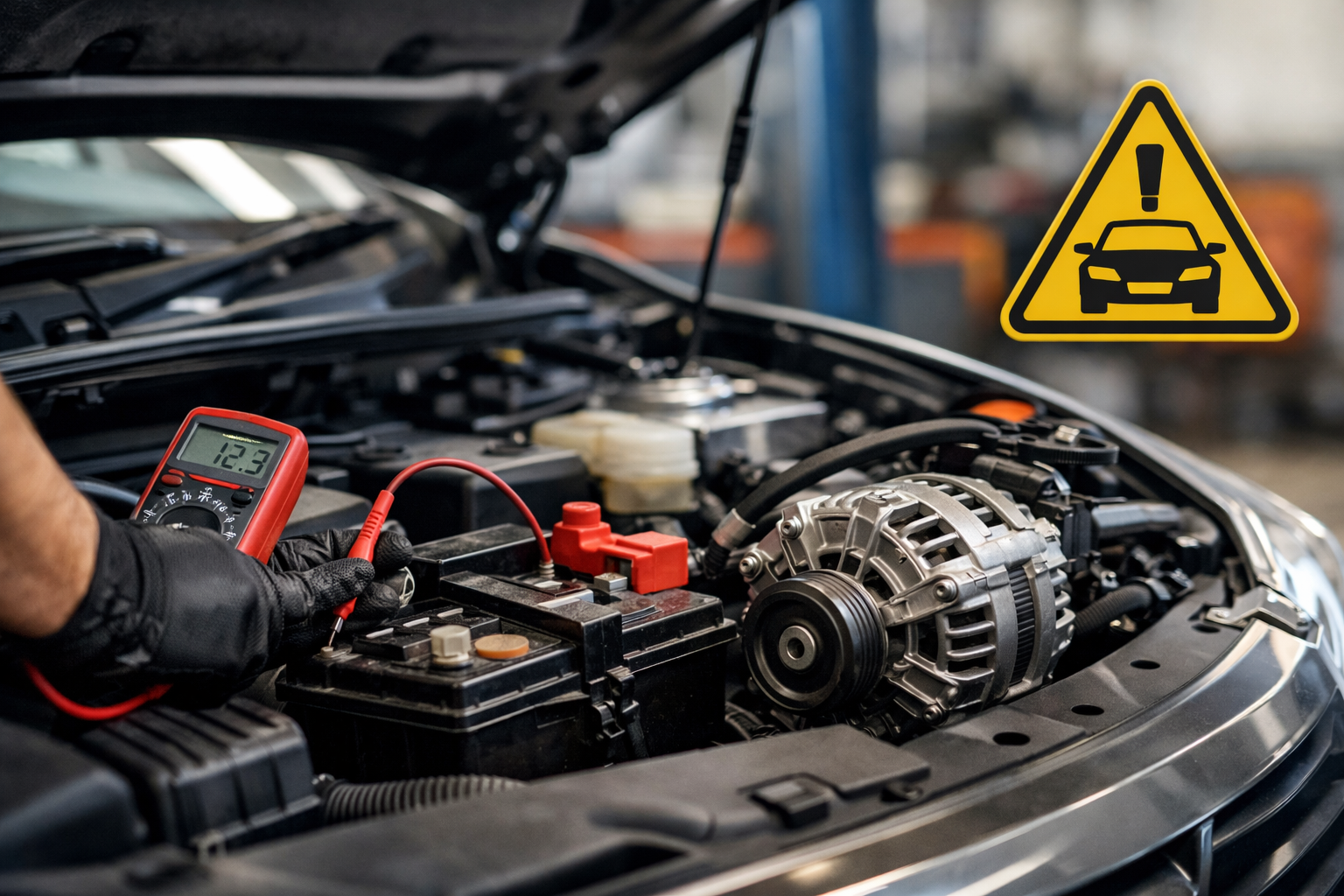
- Battery voltage and load testing
- Alternator charging output test
- Parasitic drain checks
- Full electrical diagnostics
This ensures the correct part is replaced, avoiding unnecessary costs.
When to Book a Garage
You should seek professional help if:
- Your car repeatedly needs jump-starting
- Warning lights stay on
- The car cuts out while driving
- Electrical faults keep returning
Early diagnosis can prevent breakdowns and protect other electrical components.
Final Thoughts: Battery or Alternator?
If your car won’t start, the battery is usually the first culprit — especially if the car starts with a jump. However, if the problem keeps coming back or the car dies while driving, the alternator is often to blame.
Unsure which one it is? A professional diagnostic check will give you a clear answer and get you back on the road quickly.
Need a Battery Check or Alternator Repair?
Book a battery test, alternator replacement, or full car diagnostic today to avoid unexpected breakdowns and costly repairs.